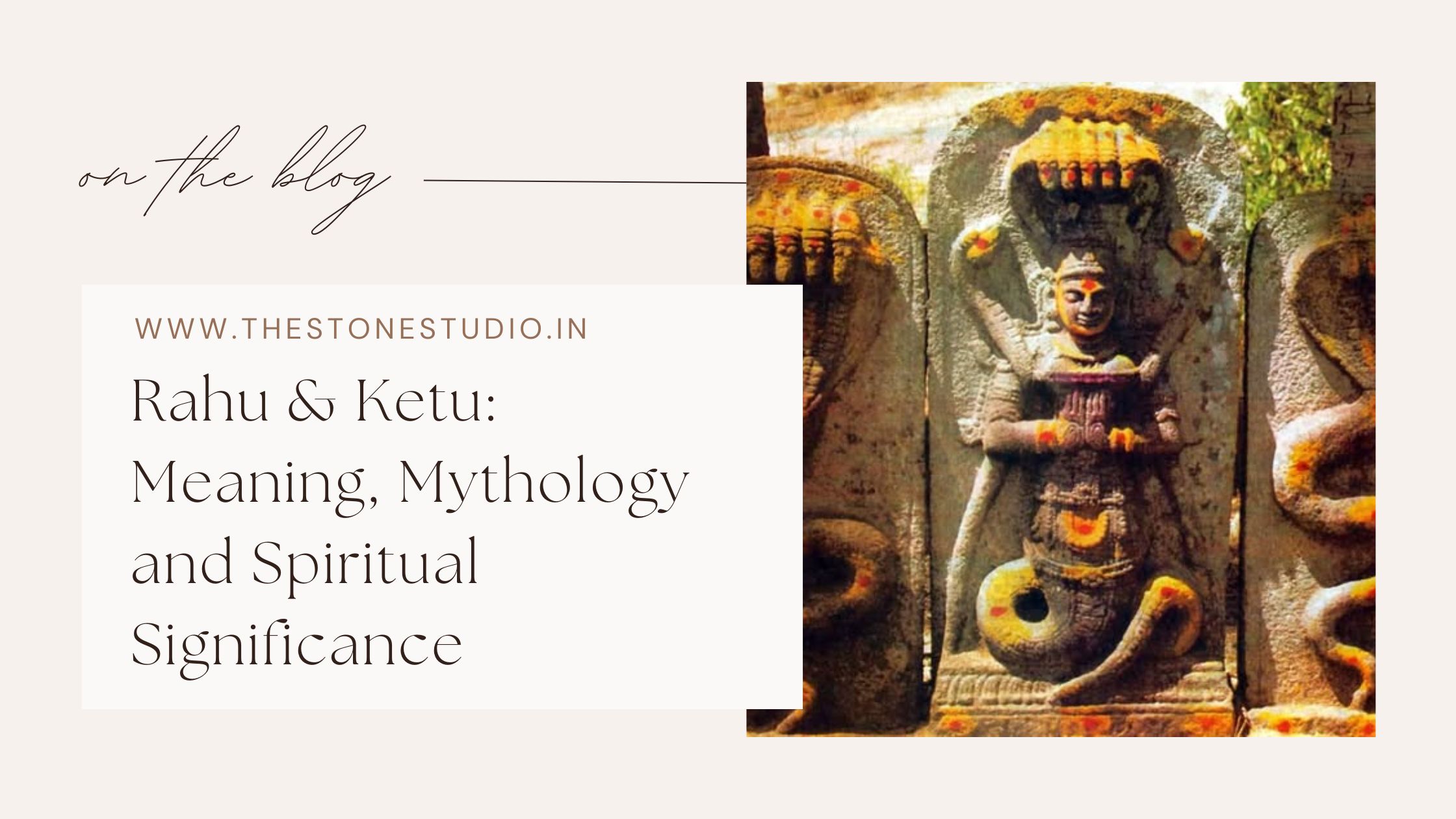
Rahu & Ketu Spiritual Significance
Table of Contents
Rahu & Ketu Spiritual Significance, their Meaning in Mythology
In Hindu beliefs, there are many powerful influences in our lives that we can’t always see. Some of the strongest forces are subtle and connected to our actions, thoughts, and the deeper mysteries of life. Two important figures in this context are Rahu and Ketu, often called the shadow planets in Vedic astrology.
Unlike planets you can actually see in the night sky, like Mars or Jupiter, Rahu and Ketu aren’t physical objects, they have a significant impact on myths, astrology, and spirituality. Rahu & Ketu Spiritual Significance represent essential life concepts such as desire and letting go, illusion and freedom, obsession and enlightenment.
Together, they create a fascinating story in Hindu mythology that involves themes of deception, divine justice, cosmic changes, and the growth of our spirits. Many people first learn about Rahu and Ketu through astrology, particularly when discussing various life scenarios—such as challenges, delays, ambitions, unexpected changes, confusion, or moments of spiritual awakening.
However, their importance goes beyond just what you might see in an astrological chart. In Hindu stories, Rahu and Ketu aren’t merely negative forces to be feared; they act as teachers in the cosmic sense. They help us understand where we may feel stuck in our thinking and where we need to evolve beyond our attachments. This blog will explore who Rahu and Ketu are, their origins, the myths surrounding them, their spiritual meanings, related beliefs, famous temples dedicated to them, and the deeper symbolism that gives them significance in Hindu tradition.
Who Are Rahu and Ketu?
Rahu and Ketu are often referred to as shadow planets in Vedic astrology, even though they are not actual planets. They represent the north and south points where the Moon’s path crosses the Sun’s path.
This unique relationship is why they are closely linked to eclipses. When the Sun, Moon, and these points align, we witness an eclipse, an event that many cultures see as a significant cosmic occurrence filled with meaning. In this context, Rahu is thought of as the head of a serpent, while Ketu is seen as its body or tail.
Rahu is associated with feelings of hunger for success, ambition, worldly desires, and even a sense of illusion. It represents our material cravings and the chaos that comes with seeking external validation. On the other hand, Ketu embodies detachment, spiritual awakening, and the quest for deeper understanding. It signifies the journey inward, away from the distractions of the material world. Together, Rahu and Ketu represent two sides of the same coin. While Rahu pulls us toward the external world and our desires, Ketu urges us to look within for growth and enlightenment. This dynamic duo captures the entire spectrum of human experience, moving from our cravings to finding wisdom and inner peace.
The Origin Story of Rahu and Ketu
One of the most popular stories about Rahu and Ketu comes from a famous event in Hindu mythology called Samudra Manthan, or the churning of the ocean of milk. This tale is well-known and appears in many ancient texts. In this story, the gods (known as devas) and demons (called asuras) worked together to churn the cosmic ocean to find amrita, the nectar of immortality. As they churned, various treasures emerged from the ocean, and eventually, the coveted nectar appeared.
To make sure that only the gods received this magical drink, Lord Vishnu transformed into a beautiful enchantress named Mohini, who intended to distribute the nectar carefully. Among the demons was a clever figure named Svarbhanu. He noticed what was happening and pretended to be one of the gods, positioning himself between the Sun (Surya) and the Moon (Chandra) to sneak some nectar.
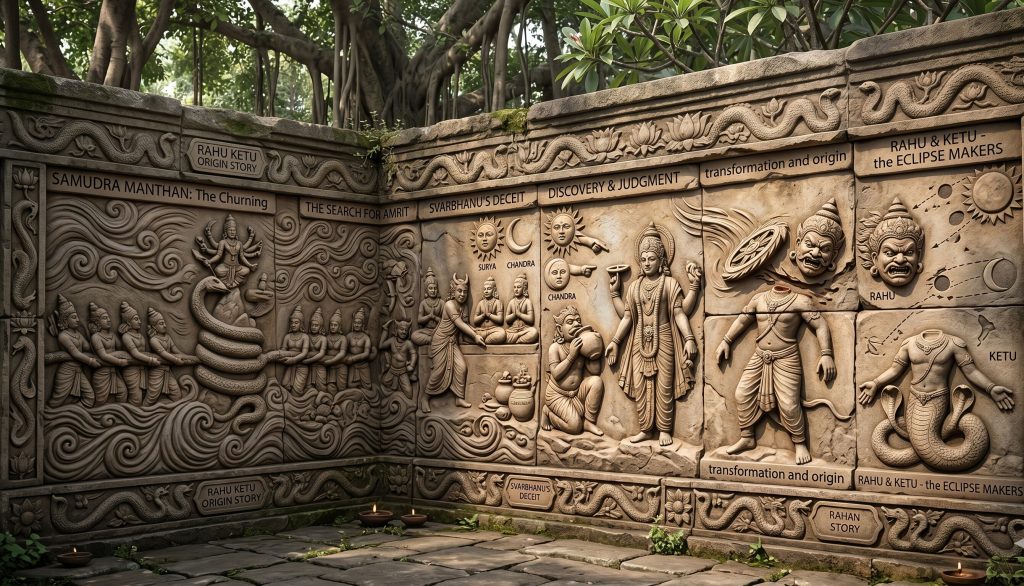
However, the Sun and Moon recognized his trick and informed Vishnu. In a flash, Vishnu cut off Svarbhanu’s head with a powerful weapon called the Sudarshana Chakra. Though his head was severed, Svarbhanu didn’t die because he had already tasted the nectar. This is how he became Rahu, the head that would seek revenge on the Sun and Moon. His body transformed into Ketu.
This story also explains why we experience eclipses. Rahu, who remembers how the Sun and Moon revealed his disguise, occasionally tries to swallow them in retribution. However, because Rahu is just a head, the Sun and Moon always return. In some traditions, Ketu also plays a role in this cycle of darkness and light, completing the mystery of the cosmic dance between them.
Hindu Myth and Spiritual Symbolism
Rahu in Hindu Myth and Spiritual Symbolism: Rahu is often feared due to his associations with confusion, instability, obsession, and unfulfilled cravings. However, he symbolizes intensity, ambition, and disruption, urging the soul into new territories through discomfort.
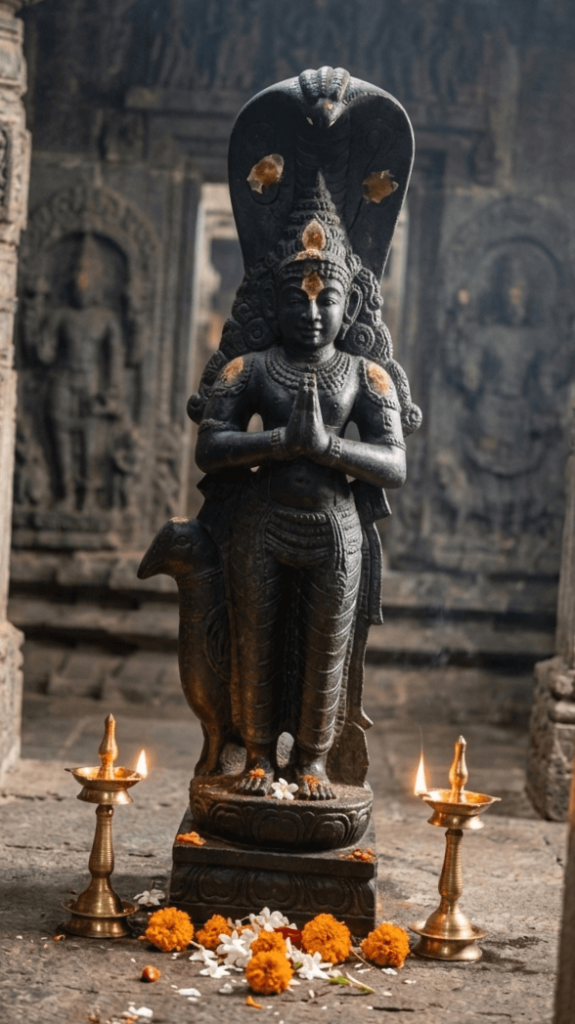
Spiritually, Rahu represents maya, governing ambition, power, fame, secrets, manipulation, and desire for social elevation. He is linked to innovation, foreign travel, technology, and breaking rigid structures. While associated with periods of external success and temptation, these experiences can catalyze wisdom, revealing our hidden desires.
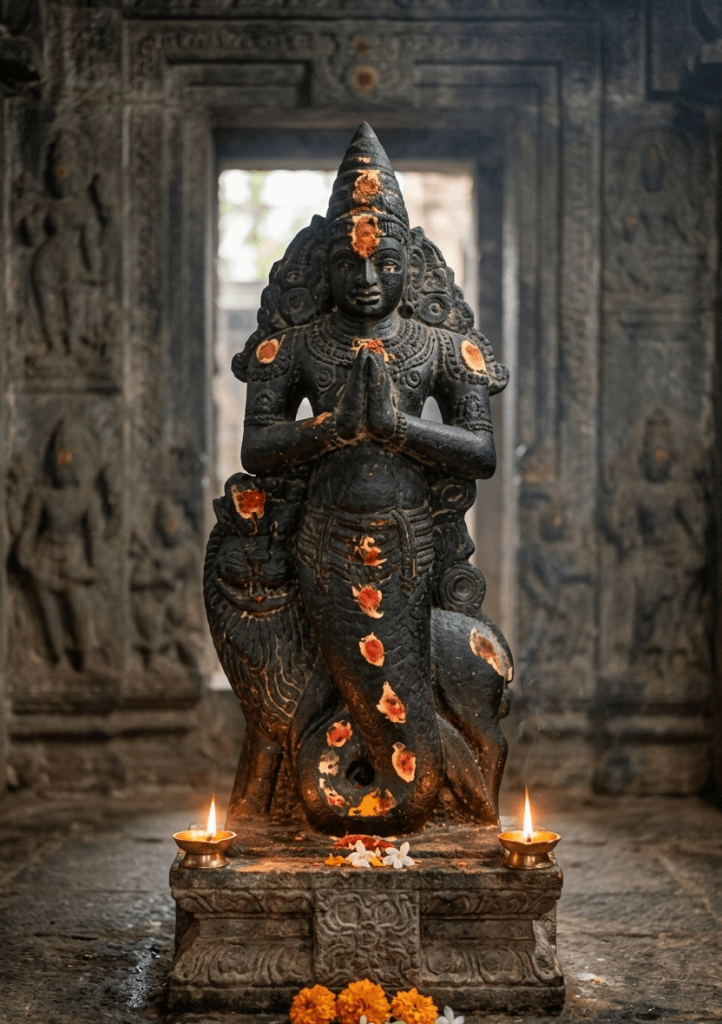
Ketu in Hindu Myth and Spiritual Symbolism: Ketu is subtler, creating separation where Rahu creates attachment. While Rahu embodies the storm of becoming, Ketu represents the calm after the fire.
He is associated with inner transformation, spiritual disciplines, and ancestral karma. Symbolizing movement without ego, Ketu can evoke inquisitiveness in worldly matters but opens pathways to spiritual growth. He prompts deeper questions about restlessness and identity, teaching that material gain is not the ultimate answer. While Rahu intoxicates, Ketu purifies and dissolves the ego.
Head over to The Stone Studio to explore our stunning range of Navagraha statues and other Godly Figures, expertly crafted to enhance the beauty of your home and temple!
www.thestonestudio.in
Download Our Free Brochure Here!
Rahu and Ketu in Relation to Eclipses
- One of the most well-known mythological beliefs about Rahu and Ketu is their role in solar and lunar eclipses.
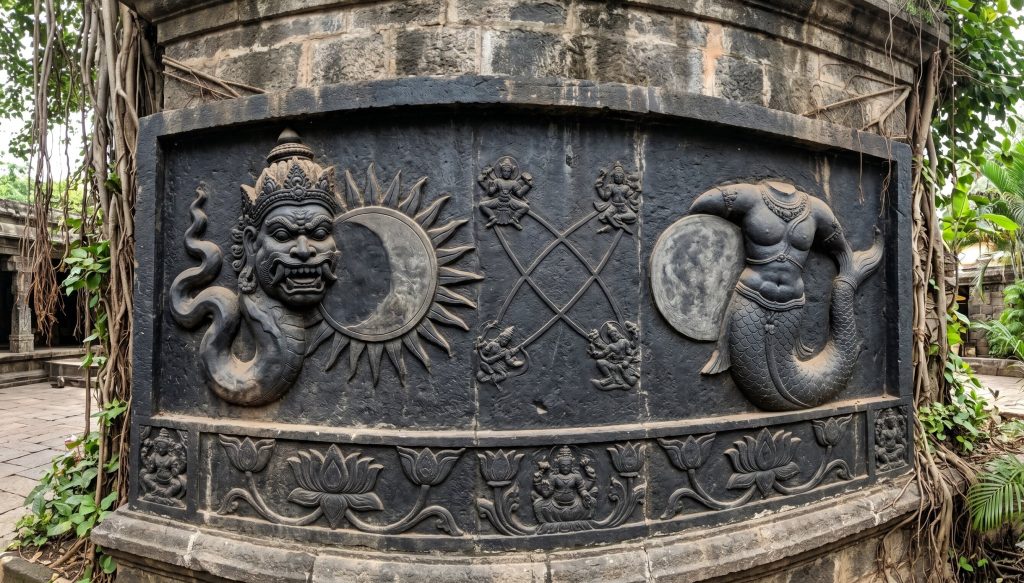
According to tradition, an eclipse occurs when Rahu or Ketu attempts to swallow the Sun or the Moon, symbolizing their cosmic revenge.
- This imagery is powerful because eclipses themselves appear mysterious, intense, and transformative, reflecting deeper spiritual meanings.
Symbolic and Spiritual Meaning
Rahu and Ketu are closely associated with transformation, dispelling of inner illusions, and karmic cleansing.
- The eclipse represents a temporary phase where light is obscured but not destroyed.
- This teaches an important life lesson:
- Darkness is temporary
- Challenges are often transformative
- Difficult phases can lead to inner growth and awareness
Rahu and Ketu in Temple Worship
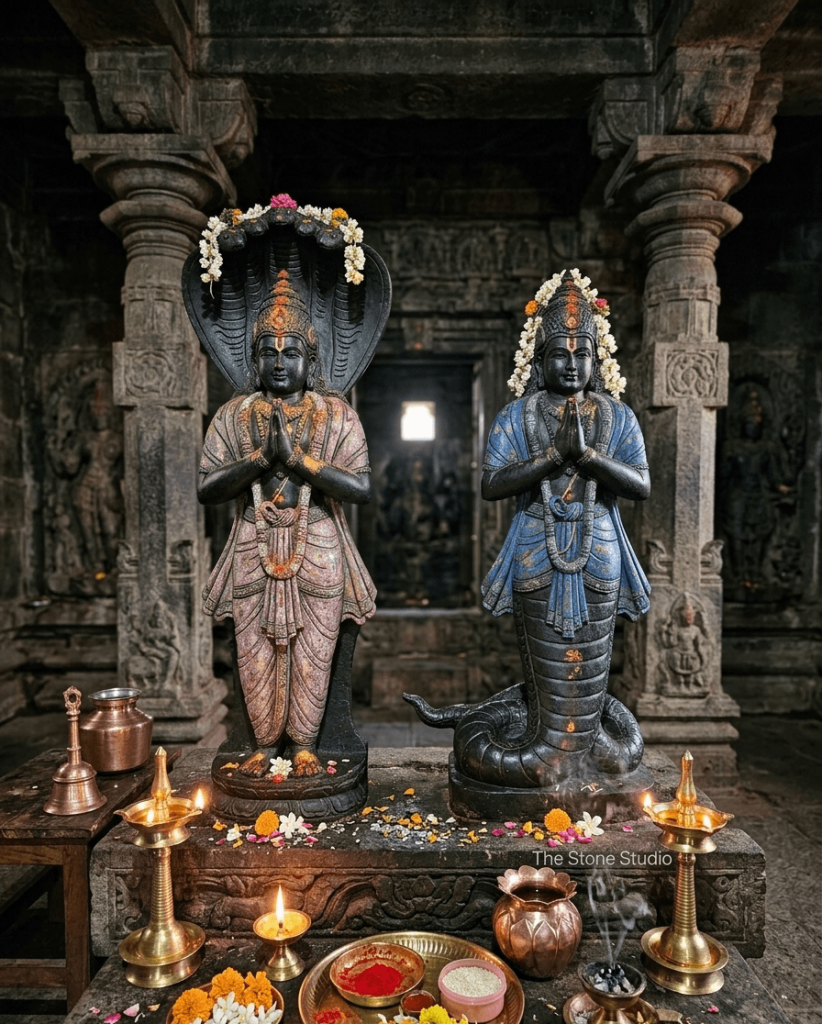
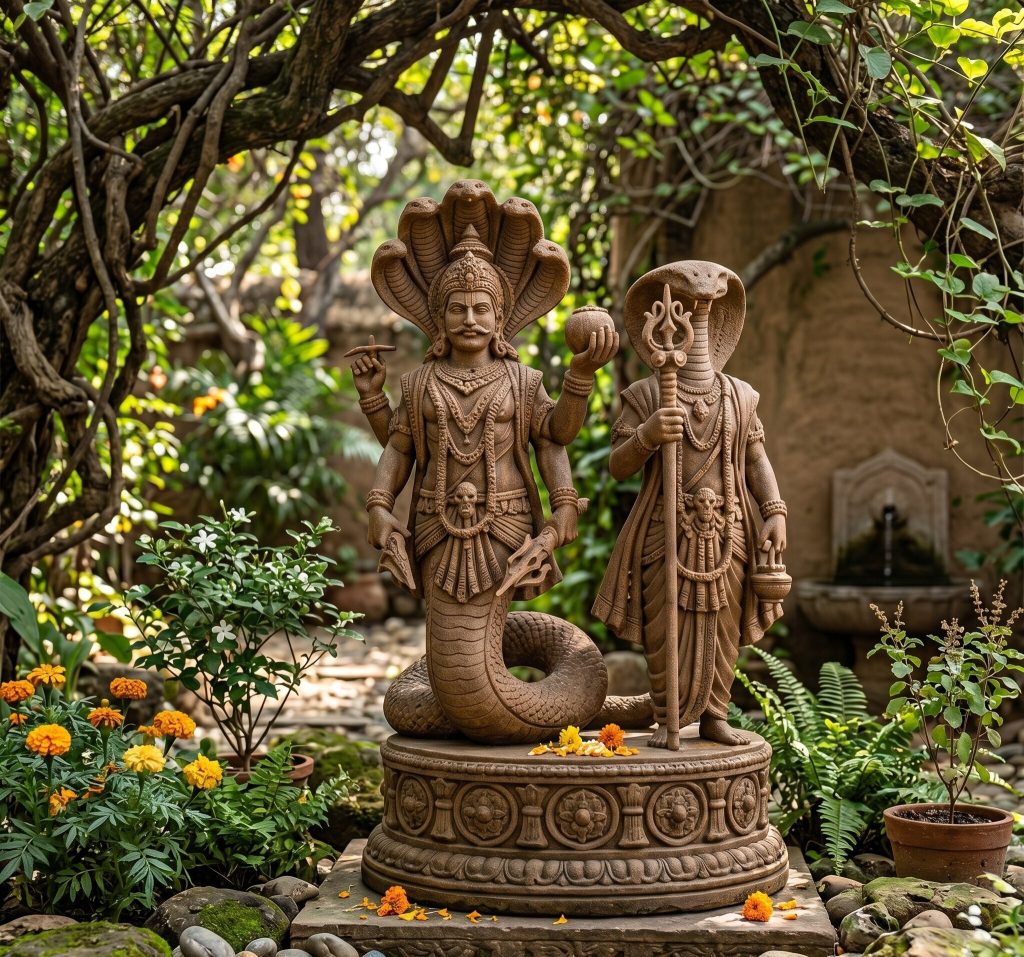
While Rahu and Ketu are often known through astrology, they are also worshipped in temples, especially in South India. In many Navagraha temples, Rahu and Ketu are given distinct forms and shrines. Their statues are often striking, serpent-like, and visually symbolic of their shadowy yet powerful status in cosmic order.
- One of the best-known temple traditions related to Rahu and Ketu is found in Tamil Nadu, where Navagraha worship is deeply rooted. Temples associated with these grahas attract devotees seeking relief from Rahu-Ketu dosha, naga dosha, delays, instability, or spiritual blockages.
- Among the most famous is the Rahu Sthalam at Thirunageswaram, where Rahu is especially worshipped. This temple is widely known for rituals related to Rahu and for its rich serpent symbolism. Another important temple is Keezhaperumpallam, traditionally associated with Ketu. Devotees visit these temples seeking karmic relief, spiritual cleansing, and graha peace.
The Sri Kalahasti Temple in Andhra Pradesh is also one of the most well-known places for Rahu-Ketu puja. Many devotees visit this temple specifically to perform remedies related to Rahu and Ketu afflictions. The temple’s atmosphere, mythological depth, and ritual importance have made it one of the most spiritually significant centers for shadow planet worship.
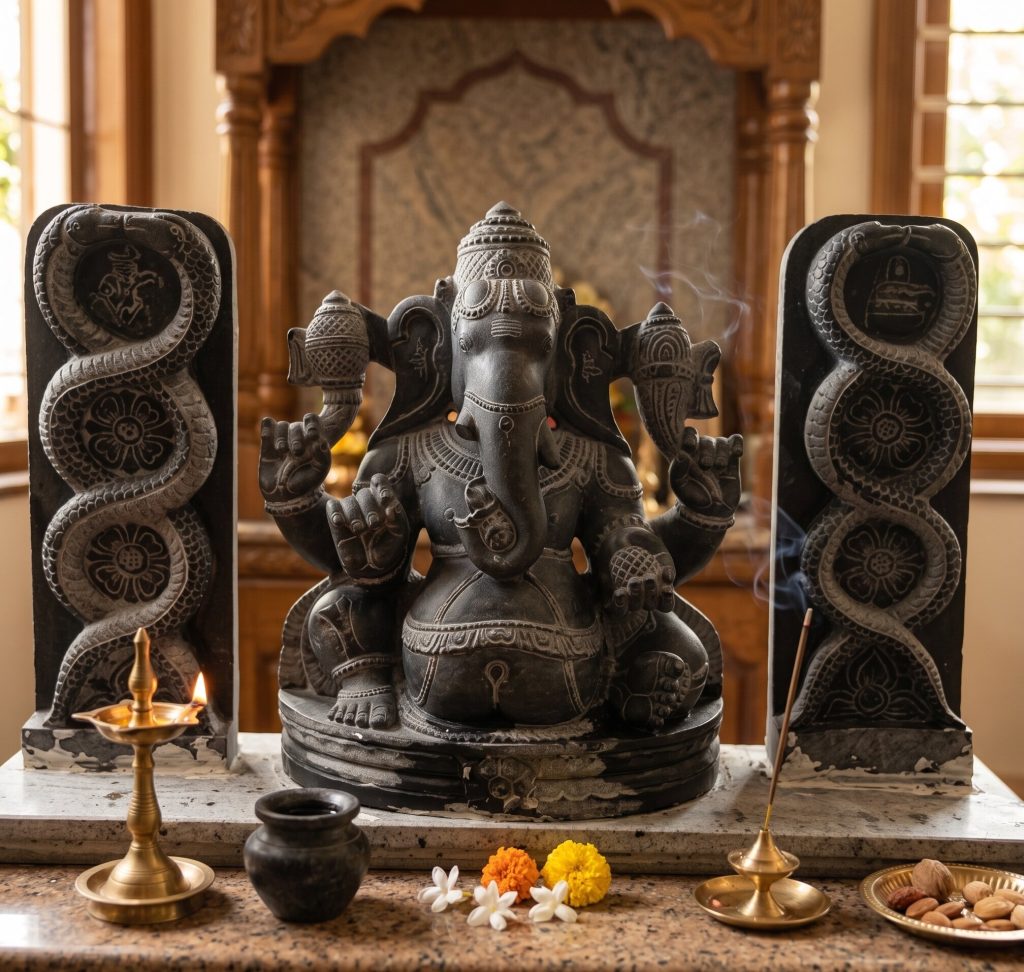
- In addition, several Navagraha temples across India include sculptural depictions of Rahu and Ketu in serpent forms, often with folded hands, fierce expressions, or celestial iconography. These statues are not merely decorative. They symbolize karmic power, cosmic mystery, and the reminder that what is unseen can still shape destiny.
- For homes and sacred spaces, representations of Navagraha sets or symbolic serpent-energy sculptures are sometimes used, but traditionally, Rahu-Ketu worship is approached with respect, ritual purity, and awareness rather than casual decorative intent.
FAQs About Rahu and Ketu
Who are Rahu and Ketu in Hindu mythology?
Rahu and Ketu are the two parts of the asura Svarbhanu, who was cut in half by Lord Vishnu during the distribution of amrita. His immortal head became Rahu, and his body became Ketu.
Why are Rahu and Ketu called shadow planets?
They are called shadow planets because they are not physical planets. In astronomy, they correspond to the north and south lunar nodes, the eclipse points where the Sun and Moon align.
What do Rahu and Ketu symbolize spiritually?
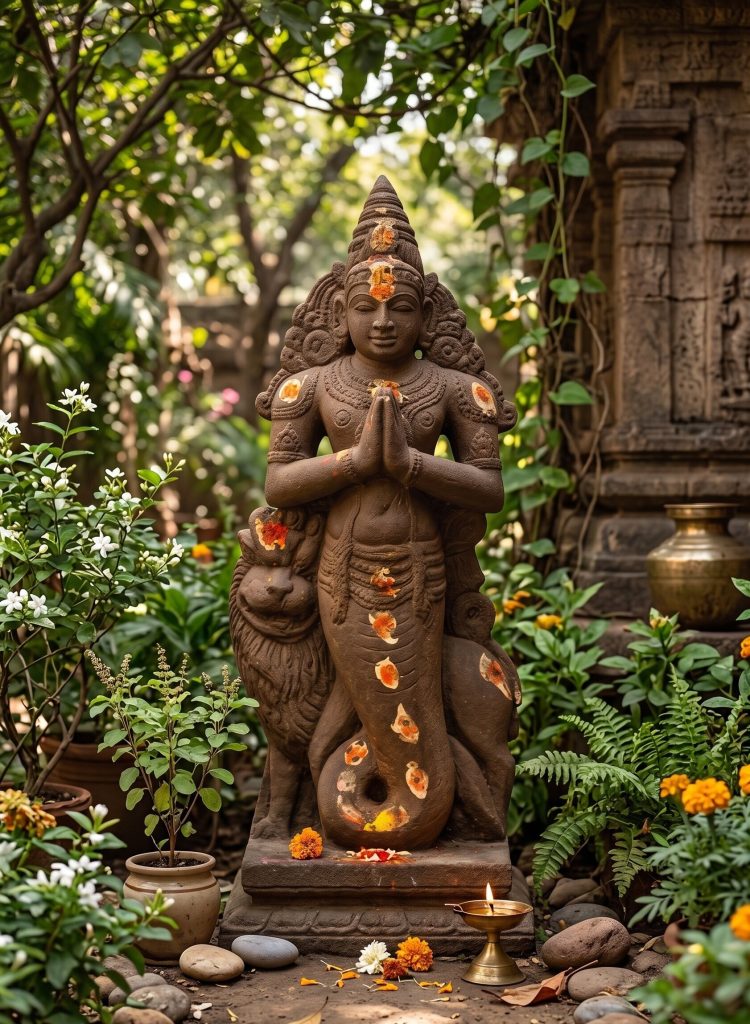
Rahu symbolizes desire, illusion, ambition, obsession, and karmic entanglement. Ketu symbolizes detachment, spiritual insight, karmic release, renunciation, and inner awakening.
Why are Rahu and Ketu connected with eclipses?
According to myth, Rahu seeks revenge on the Sun and Moon for revealing his deception during the amrita episode. He swallows them, causing eclipses, but cannot hold them permanently.
Are Rahu and Ketu always negative?
No. Though often feared in astrology, they are also powerful spiritual teachers. Rahu can bring worldly success and breakthrough experiences, while Ketu can bring wisdom, intuition, and liberation.
Which temples are famous for Rahu and Ketu worship?
Important temples include Thirunageswaram for Rahu, Keezhaperumpallam for Ketu, and Sri Kalahasti for Rahu-Ketu puja.
What kind of statues represent Rahu and Ketu?
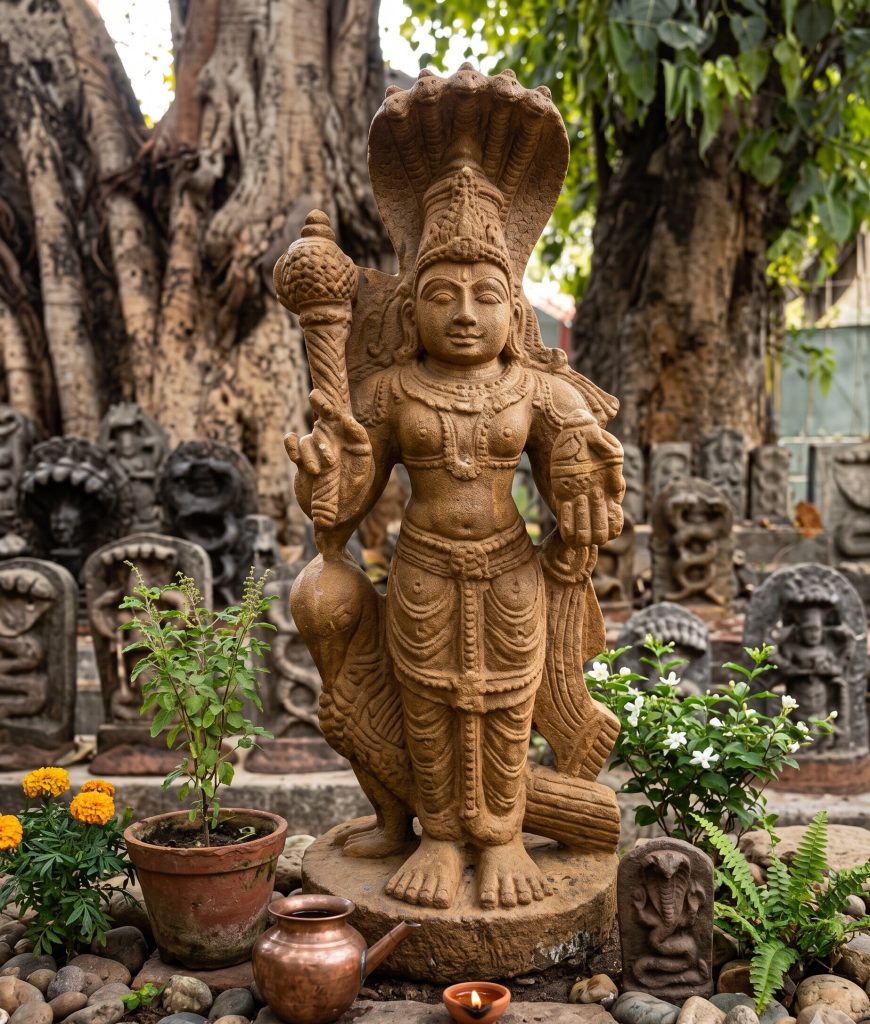
Rahu is usually shown with a fierce celestial upper form and serpent symbolism, while Ketu is depicted with serpent-body imagery and mystical iconography that reflects detachment and karmic transformation.
What is the significance of Rahu and Ketu in daily life?
They symbolize hidden karmic forces, sudden changes, deep desire, release, spiritual growth, and the lessons that arise from both attachment and detachment.
Can Rahu and Ketu be worshipped at home?
Home worship is possible through simple Navagraha prayers, mantra recitation, lamps, and reverence, but many devotees prefer temple rituals for stronger traditional observance.
What is the main lesson of Rahu and Ketu in Hindu myth?
The main lesson of Rahu and Ketu in Hindu mythology is that unchecked desire, illusion, and ego can disturb inner peace, while detachment and spiritual awareness lead to growth.
Rahu represents ambition, obsession, temptation, and worldly desires. It teaches us to be careful of chasing success, power, or pleasure without wisdom. Ketu represents detachment, past karma, spiritual awakening, and liberation. It reminds us that not everything in life can be controlled or possessed.
Together, Rahu and Ketu teach a powerful balance: desire can push us forward, but detachment gives us wisdom. Their story encourages us to rise above illusion, understand our karma, and move toward truth, humility, and spiritual clarity.
Rahu and Ketu are fascinating figures in Hindu mythology because they reflect the complex aspects of human life. They exist in a space where our actions and their consequences can teach us valuable lessons, where loss can lead to personal growth, desires can lead us astray, and challenges can help us awaken to our true selves.
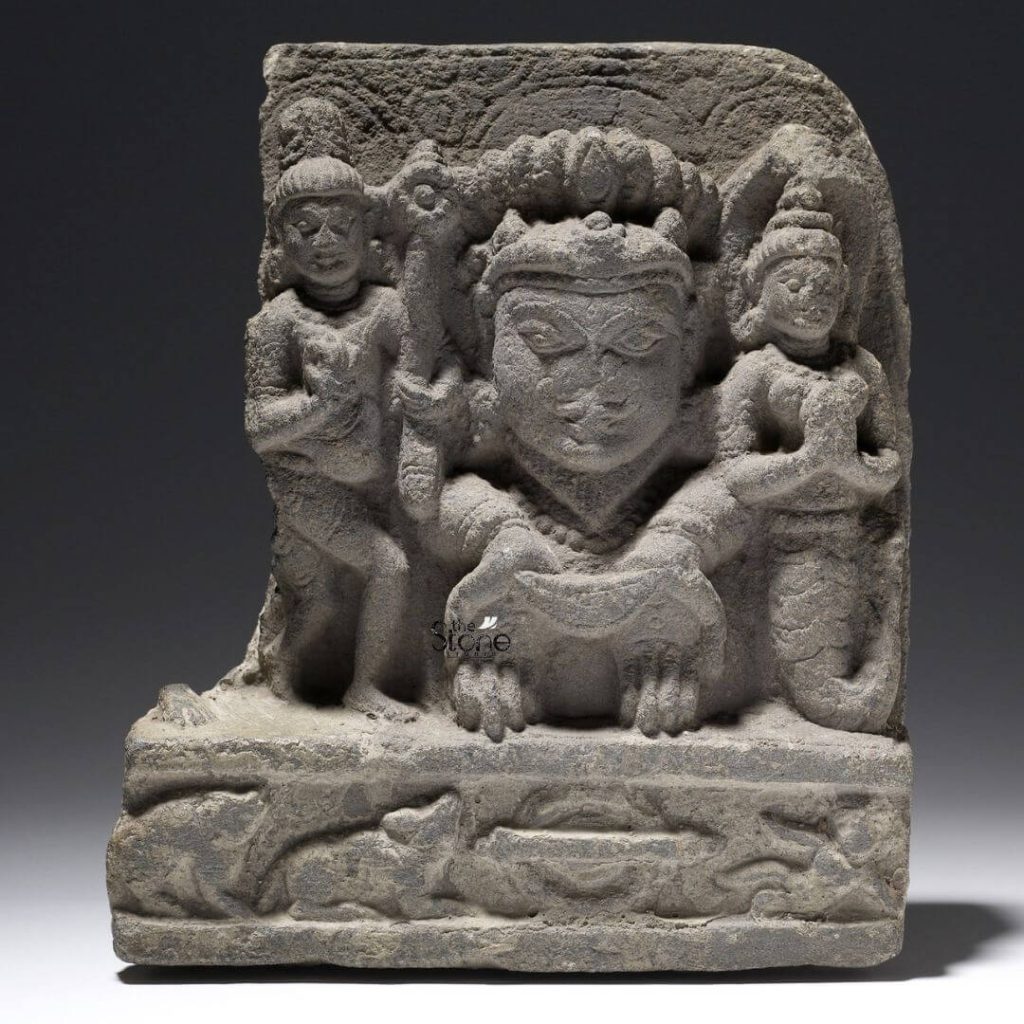
Rahu represents our strong desires and the drive that pushes us to seek out experiences in the world. In contrast, Ketu symbolizes the quiet reflection that reminds us of the limitations of what the world can truly offer. While Rahu is our pursuit or obsession with external things, Ketu represents a sense of release and understanding beyond those pursuits.
In this way, Rahu and Ketu are more than just abstract concepts; they act as mirrors for our spiritual journeys. They help us understand the important transition from craving material things to achieving a deeper awareness and consciousness about life.
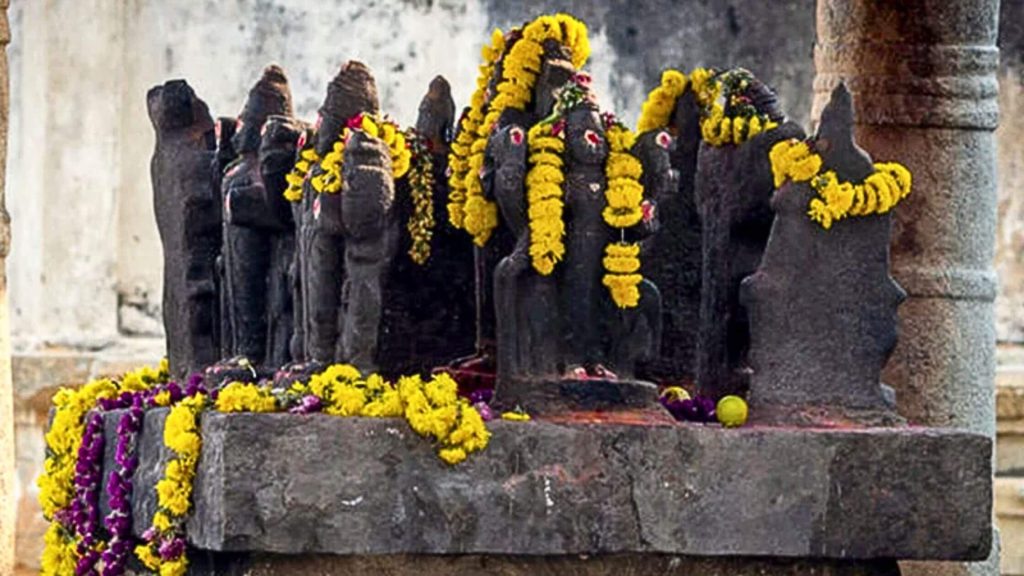
Explore The Stone Studio’s unique collections to get Rahu Ketu statues and navagraha statues your Home & temple!